
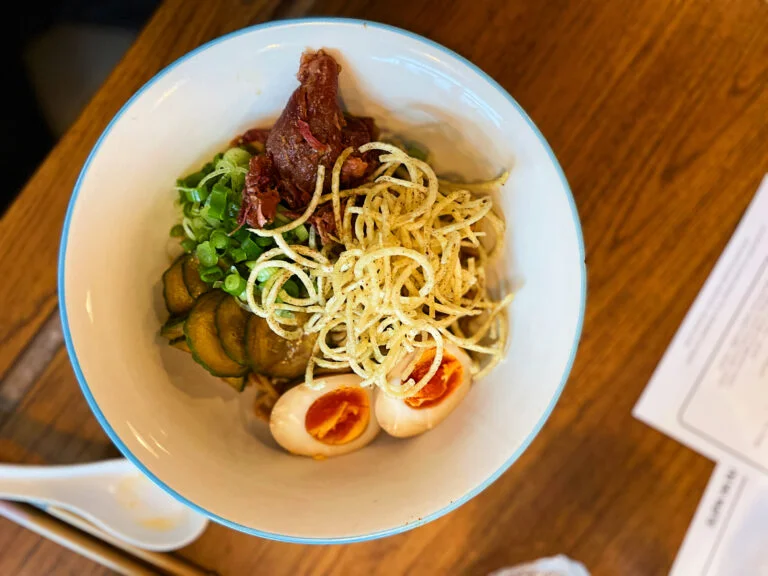

After a nomadic life of supper clubs & cult pop-ups, supa you has finally found its home. The new Dalston restaurant (helmed by ex-NOPI & Berber & Q chef Luke Findlay) offers a traditionally inauthentic’ ramen menu.
Think inventive Anglo-Japanese twists on the classic like the soupless Ham, Egg, & Chips mazemen with its umami-loaded ham hock chashu, spring onions & potato straws. And noodle ice cream for dessert, naturally.
Ham, Egg & Chips Mazemen
When it comes to slurping umami-laden bowls of ramen, few can do it better than Luke Findlay. The former supper club and cult pop-up chef now has a permanent restaurant to his name in Hackney, and it’s an absolute corker. The menu has a few tweaks from his roving days, with new dishes such as the Ham, Egg & Chips Mazemen and Cumberland Sausage Tantanmen, but many of its most striking elements have been retained.
Mazemen translates to mixed noodles and, as the name suggests, is a soup-less variation on ramen that integrates favorite ramen ingredients without the broth. The chefs use thicker noodles than traditional ramen to have more surface area to cling to the sauces and toppings. This allows the flavors of the tare, chile paste, garlic oil, chashu pork, and soft poached egg to permeate the noodles and add to their umami.
Several types of amazement exist, including abura-soba and soupless tan-tan men. Abura-soba may be categorized into three types: Tokyo-style, which features sesame oil and dry minced pork, Chengdu-style which uses Sichuan peppers to give the noodles a tingling sensation on the tongue; and Hiroshima-style style, which offers many different condiments like fried onions and green leaves, seasoned ground meats and soft-boiled eggs. Other toppings include bonito flakes, shredded nori, fish powder, and other vegetables.
The maze above, available all day, is just as good as it sounds and demonstrates the versatility of the style. The smoked bacon and XO sauce are just as delicious as you might expect, but the slow-cooked onsen egg makes this particular bowl so special. It’s pierced with chopsticks and allowed to cool slightly so you can scoop up the rich, silky yolk and slather it on top of the noodles and tare. Combining all this richness, saltiness, and umami is a mouthgasm in waiting. It’s a must for any Mazemen lover.
Cumberland Sausage Tantanmen
This tantanmen ramen recipe is a cross between two classics. It’s a twist on Sichuan dan daodles with bouncy ramen, flflavoredil, and an eply sasavoryork mince. It’s a mashup of Chinese and Japanese cuisines with a few twists on traditional ramen to make it truly delicious.
It’s not quite as spicy as the traditional Sichuan version, but it is a great alternative for those who want to enjoy this delicious style of ramen at home. The key difference is that this version uses chicken stock instead of pork. This is because chicken has less myoglobin (a protein found in pork), so it won’t be as hot.
Chicken broth also contains more dairy than traditional ramen soup, usually milk, which mellows the spice and adds a delicious richness. You can make the stock from scratch or use a store-bought Chinese chicken stock. Adding the doubanjiang chili bean paste (also known as zhi ma jiang) and white sesame paste gives the ramen an even more complex, rich, and satisfying flavor.
You’ll find doubanjiang chili bean paste in Chinese food stores and online, or you can make a quick homemade version by mixing red miso with garlic, ginger, chilies, toasted sesame oil, and a bit of sugar. If you can’t find it, you can substitute it with Korean gochujang, a similar but slightly different flavor.
This recipe is so easy and tasty that it’s almost a shock that it took so long to discover! It’s a dish that’s bound to become a favorite.
The first thing to do is prepare the chicken stock. This can be done with a long simmer or a pressure cooker. Next, combine the ramen and Chinese-style chicken stock in a bowl. Cook the ramen according to the package instructions and drain the noodles when cooked. Pour the ramen into the soup, mix well, and garnish with the Nikumiso and mustard greens and scallions. This is a simple and quick ramen to whip up, perfect for those days when you’re craving something comforting but don’t have much time.
Roast Chicken & Buttered Chili Corn
After a nomadic life as an underground supper club and cult pop-up (and a few lockdowns), Supa Ya Ramen has finally settled down on Kingsland Road. Founded by Luke Findlay, who worked at The Hand & Flowers, NOPI, and Berber & Q before carving out his path as a champion of ‘traditionally inauthentic’ new-wave ramen, the 20-seater channels the comfort, operational agility, and DIY charm that could be the defining style for this restaurant era.
It’s not hard to see why. The ramen is inventive, delicious, and profoundly nourishing, and the puds are a masterclass in balancing flavors. For instance, a Sichuan peppercorn ice cream is floral rather than numbingly hot, and the banana slushie – made with miso caramel, peanut butter, and sesame seeds – is like a sweeter, more grown-up milkshake.
Start by preparing the chicken. Pat it dry and then carefully separate the skin from the flesh, removing any tears. Brush each piece with the chili butter, or mix the butter with a little of the chili paste and rub it all over. Place in a baking tray with the skin side up and roast for 40 minutes, basting halfway through. In the meantime, boil a pan of salted water and cook the corn for 10 minutes. Drain well and set aside.
Once the chicken has cooked, add the broth to the corn and cook until thickened, about a minute. Toss in the remaining ingredients and season. Serve in bowls, topped with spring onion/scallion, fried garlic, red pepper powder, and sesame seeds. If you wish, serve with rice and tortillas to mop up the creamy corn sauce.
A no-fuss addition to your dinner parties this winter. The recipe is easy to follow and takes no time to prepare. Suppose you don’t have a fresh ear of corn, frozen works just as well. I also recommend leaving the husk on for roasting – this helps retain moisture, yielding juicy, deliciously sweet kernels. This dish is a definite crowd-pleaser.
Noodle Ice Cream
After a nomadic life that saw them pop up at supper clubs, a string of sell-out collaborations & the odd day-job shift, the crew behind Hackney’s Supa Ya Ramen finally have their very own bricks-and-mortar home. It’s a modestly furnished nook down on Dalston’s Kingsland Road, but that’s pretty much what you’d expect from a no-reservations BYOB joint with tables made from repurposed school desks & a kitchen so bare you can see every ingredient.
And yet, despite the lack of pizazz, it’s a restaurant with plenty to offer, especially now that they’ve embraced one of 2019’s most important food trends by adding noodles to their dessert menu. These are not your average noodles, either. They’re ice cream noodles, that’s right, and they taste delicious.
The idea is the brainchild of chef Luke Findlay, who was inspired to push ramen’s boundaries even further after visiting Japan last year. What started as a supper club in his house has now become two hugely popular restaurants serving his brand of “traditionally inauthentic” ramen in Dalston & Peckham.
In the new Noodle Ice Cream dish, strands of wheaty noodles are topped with a layer of vanilla ice cream. Drizzled with miso caramel & Sichuan pepper truffles, it’s just the kind of off-kilter fusion you’d expect from Supa Ya’s creative & inventive approach to cooking.
The dish is served with a side of soy sauce for dipping. Okabayashi explains that the ice cream strands have been whipped up to be soft and creamy, which means they won’t crumble once they come into contact with the hot, salty ramen noodles. The whole thing is finished with a generous scattering of toasted sesame seeds and grated white chocolate.
You can try this recipe at home by putting 2 – 3 scoops of vanilla ice cream into a potato ricer and squeezing it firmly, allowing the ice cream to drop in noodle shapes onto a serving dish. For best results, use a thicker type of vanilla ice cream. It should be dairy-free to avoid melting the noodles too quickly.


